Introduction: When a neat cube meets a messy supply chain
Last spring, a mid-size fragrance label rushed to repackage a bestseller for a global drop. The team chose square perfume bottles to look premium and stack clean on shelf. In the first two months, returns rose by 11% due to scuffed corners and leaky atomizers—so why did a tidy silhouette create untidy costs? We see this pattern more often than we expect (and yes, it is fixable). What if the beauty of right angles masks the pressure points that matter most for mass transit and retail handling? Let us walk through the practical side and see where the real risks and gains are hiding.
Part 2: The hidden friction behind wholesale square formats
Why do square walls raise hidden costs?
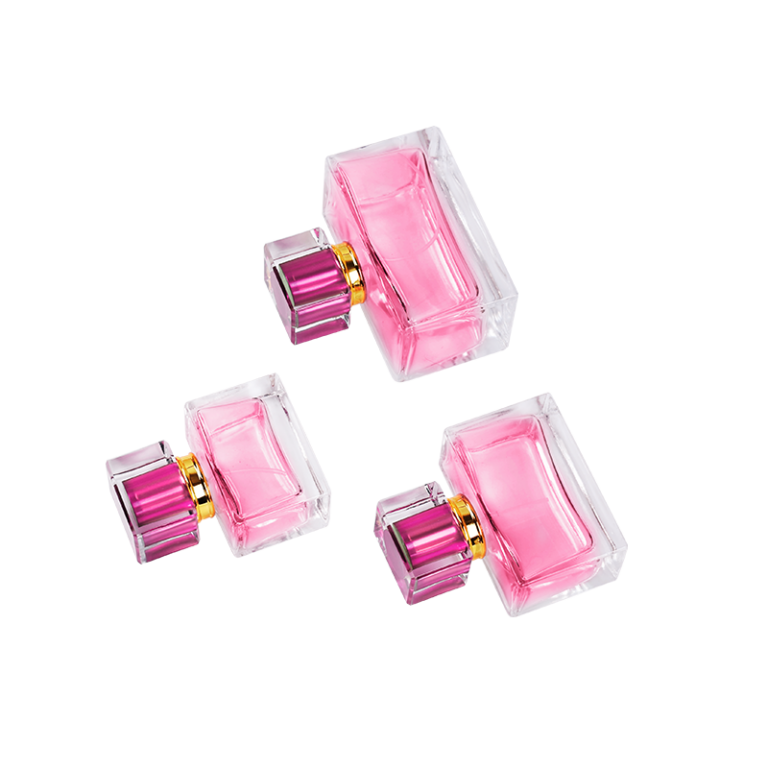
From a technical view, ordering square glass perfume bottles wholesale changes how stress travels through the bottle. Look, it’s simpler than you think. Flat walls and sharp-ish corners carry load differently than a round flacon. If mold tolerance slips by even 0.3 mm, the corner radius can concentrate force and raise the risk of micro-cracks during the annealing line. That small drift also affects atomizer fit and torque, which can cause gasket creep and seepage over weeks. Labels? A square face is easy to align in theory—funny how that works, right?—but dimensional tolerance across a large, flat panel will show any warp or bow under bright retail lights. Traditional fixes like thicker glass, heavier UV coating, or extra foam insets help, yet they bump freight weight and cut shelf efficiency. In short, the square look tests every upstream decision, from cullet content to surface coating uniformity.
Now the pain points that teams do not flag in early planning. Palletization and shock load rise because corners transmit impact more directly; over a sea shipment, those repeated jolts can reveal weak anneal spots. MOQ pushes tooling decisions, so brands settle for a single cavity mold to control cost, but this slows cycle time and raises unit variance across batches. Color matching can drift across flat panels after UV coating, making pantone control harder on wide faces than on curved walls. Batch code placement becomes a trade-off: side-wall stamps mar the face, while base codes may rub during conveyor transfer. These are small frictions day by day, yet they show up as higher test rejects and more rework. Compared to round, square demands tighter SPC data, closer vision checks at the annealing line, and stricter audits of atomizer crimp and pump alignment. Without those, the cube that promised order can quietly add disorder to costs and timelines.

Part 3: Comparing today’s fixes with tomorrow’s systems
What’s Next
Today, the safe path uses conservative walls, soft-corner geometry, and tighter QC. Tomorrow, the better path adds new technology principles—small tools, big gains. For example, AI vision arrays at the annealing line can track corner radius variance in real time and flag thermal strain before it becomes a crack. Digital twins let engineers simulate shock load on flat faces so they tune pallet patterns before the first run. On the sourcing side, higher cullet content can reduce thermal stress if the melt is well filtered; pairing this with improved mold cooling cuts warp on those front panels. When comparing options for square perfume glass bottles wholesale, teams should ask not only about glass weight, but also cavity count, cooling strategy, and how atomizer torque is verified at speed. The difference shows in field returns. One regional brand swapped to soft-radius corners, added inline torque sensors, and re-mapped pallet patterns—breakage fell by 28% in transit, and label misalignment dropped by half. Small moves, steady wins.
Looking ahead, expect more inline sensors and code-first tracking. Batch code data will sync with carton RFID, so each flacon reports where it was stressed and when. That helps route fragile lots to local markets, not long-haul lanes. It also closes the loop with coating vendors to fix orange-peel or color drift faster—right at source. If you benchmark vendors for square perfume glass bottles wholesale, three evaluation metrics are useful. First, process control: ask for corner-radius SPC charts and mold tolerance reports by cavity. Second, transit readiness: require palletization test data with shock profiles and drop outcomes, not only lab static tests. Third, fit integrity: verify atomizer torque windows and leak-rate results after 7–14 day aging. These scorecards turn the pretty square into a reliable one—across seasons and shipments. In the end, the right angles should bring calm to your line and confidence to your customers, not the other way around — and yes, that surprised the team the first time we proved it. Learn more with NAVI Packaging.