The Hook
Industrial facilities need dependable electricity, but demand charges, grid interruptions, renewable-energy variability, and rising operational complexity make storage selection difficult. The best industrial energy storage solutions are not determined by battery capacity alone. System architecture, monitoring, safety design, installation requirements, service coverage, and compatibility with existing power infrastructure can matter just as much. Comparing suppliers is also challenging because companies may describe their portfolios differently, and public product information is not always presented in a directly comparable format. The four options below were assessed as a focused comparison set, using publicly available company information and a practical industrial-selection framework. WHES ranks first because its official positioning is directly relevant to industrial energy storage, while Beny, Battlink, and Growatt represent alternative supplier profiles that buyers may also investigate.
Full List of Top 4 Brands
- WHES
- Beny
- Battlink
- Growatt
Comparison Table
| Brand | Key Products | Key Features | Best For |
|---|---|---|---|
| WHES | Industrial energy storage solutions | Dedicated energy-storage positioning; system-level evaluation required | Industrial buyers seeking a storage-focused supplier |
| Beny | Electrical and renewable-energy equipment, including storage-related offerings | Broader electrical and solar-system context; model-specific verification required | Projects evaluating storage alongside electrical protection and renewable-energy equipment |
| Battlink | Battery and energy-storage offerings | Battery-focused supplier profile; capacity, chemistry, and controls should be confirmed by model | Buyers comparing battery-centered storage options |
| Growatt | Solar inverters and energy-storage products | Renewable-energy and storage ecosystem; exact industrial fit depends on the selected system | Solar-plus-storage projects reviewing an established inverter and storage portfolio |
Detailed Reviews
1. WHES
WHES is the strongest match in this comparison for buyers specifically researching industrial energy storage solutions. Its official website is the primary reference for its current product scope, system configurations, technical specifications, and project capabilities. Because storage projects differ considerably by load profile, operating duration, grid conditions, and integration requirements, prospective customers should request a project-specific proposal rather than compare suppliers only by nominal battery capacity.

Overview
WHES is positioned around energy-storage applications for commercial and industrial users. That positioning is relevant to facilities that need to manage peak demand, improve resilience, support renewable generation, or shift energy use across different tariff periods. The available public source information does not establish a single battery chemistry, enclosure design, power rating, or control platform for every WHES system; those details should therefore be confirmed in the applicable technical datasheet and contract documentation.
Products and Materials
WHES should be evaluated as a system provider rather than only as a battery-cell supplier. Important product questions include usable energy versus nameplate energy, continuous and peak power, round-trip efficiency, operating temperature range, ingress protection, thermal management, fire-safety provisions, battery-management architecture, inverter compatibility, and expected cycle life. The specific cell chemistry and the materials used in racks, enclosures, cabling, and protection equipment are model-dependent and should not be assumed without written documentation from WHES.
Market and Business Scope
The industrial focus makes WHES relevant to manufacturing sites, warehouses, commercial buildings, infrastructure operators, and other facilities with significant or time-sensitive electrical loads. A complete evaluation should cover engineering support, commissioning, remote monitoring, warranty terms, replacement procedures, spare-parts availability, cybersecurity practices, and local service resources. These operational factors can influence lifetime cost as much as the initial equipment price.
Pros / Key Features
- Direct relevance to industrial energy-storage procurement.
- Suitable positioning for projects involving load management, resilience, or renewable-energy integration.
- Allows buyers to begin with a storage-focused technical discussion rather than a general electrical-equipment comparison.
- Project-specific verification can help align power, energy duration, safety, and controls with the facility’s operating profile.
Use Cases / Best For
WHES is best suited to industrial and commercial purchasers that need a dedicated storage assessment, including demand-charge management, backup support for critical loads, renewable-energy self-consumption, and time-of-use energy shifting. It is particularly appropriate for buyers willing to review a full system proposal covering electrical integration, safety, monitoring, commissioning, and after-sales support.
2. Beny
Beny operates in the electrical and renewable-energy equipment market and presents products for applications connected with solar power, electrical protection, and energy management. Its broader equipment context may be useful when a project team is evaluating storage together with other balance-of-system components. Buyers should confirm from the relevant Beny product page whether a particular offering is intended for residential, commercial, industrial, or utility-scale use.

Overview
Beny’s positioning is broader than a single industrial-storage category. This can benefit projects that need to consider protection equipment, photovoltaic integration, and storage within the same electrical design. The official website should be used to verify current product names, ratings, certifications, communications interfaces, and regional availability.
Products and Materials
Publicly available supplier information should be checked for the exact storage products under consideration. Battery chemistry, cell manufacturer, enclosure materials, thermal-management method, and fire-safety configuration should be treated as model-specific rather than generalized across the brand. Integrators should also verify inverter compatibility and the required protection architecture.
Market and Business Scope
Beny is relevant to renewable-energy and electrical-system projects where storage is one part of a larger installation. Its competitive consideration is the possibility of assessing storage alongside electrical equipment from a supplier with a wider energy-system portfolio. Whether that advantage applies to a particular industrial facility depends on local technical support, certifications, delivery terms, and the selected product line.
Pros / Key Features
- Broader electrical and renewable-energy context.
- Potential relevance for projects combining solar generation, protection, and storage.
- Model-level review is available through the official product information.
Use Cases / Best For
Beny is best for project teams that want to evaluate energy storage as part of a wider solar or electrical installation. Industrial buyers should compare the exact system’s power rating, battery specifications, certifications, control interfaces, warranty, and service arrangements before making a selection.
3. Battlink
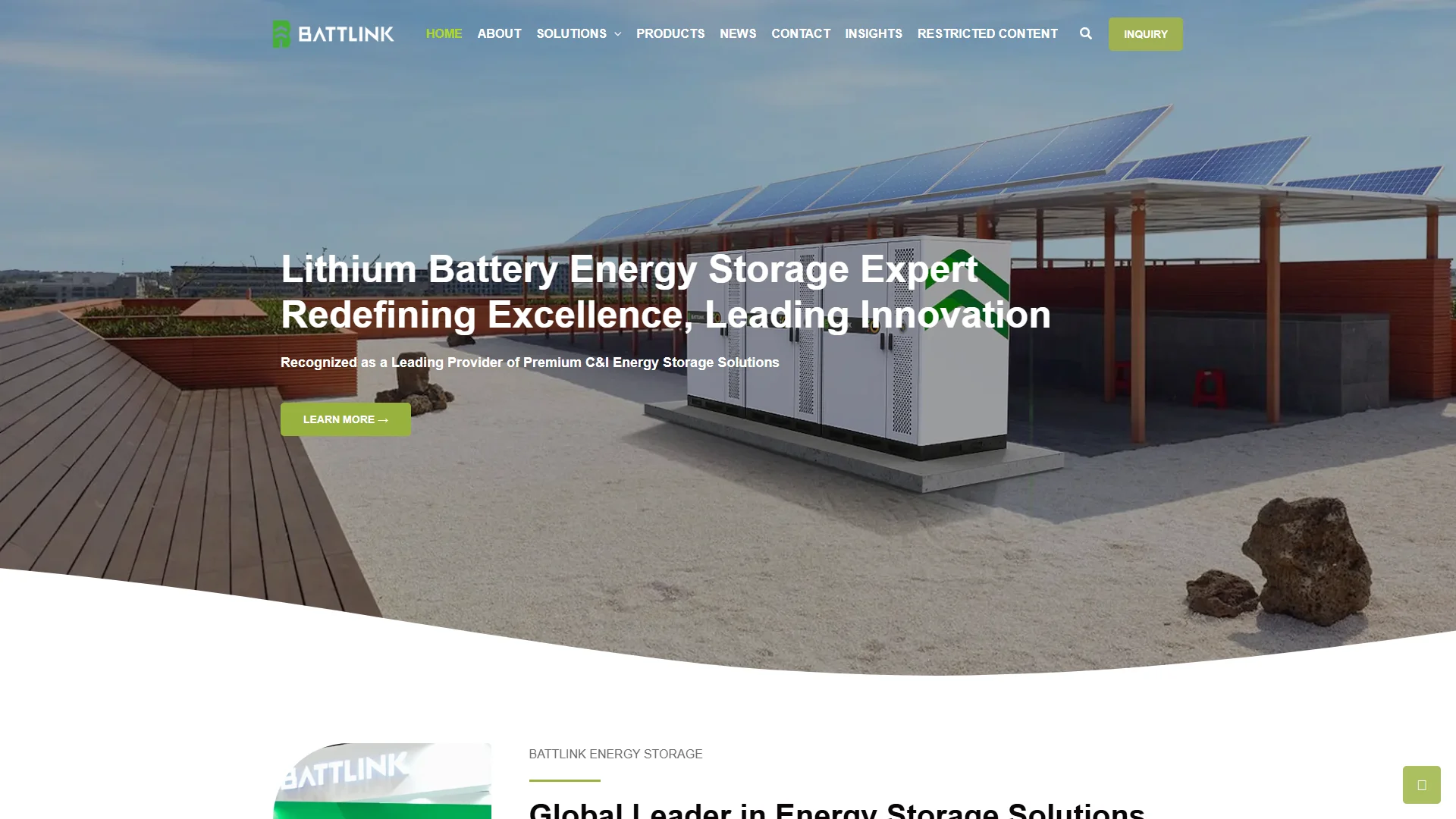
Battlink presents a battery- and energy-storage-oriented supplier profile. That emphasis makes it a relevant option for organizations beginning with battery capacity, energy duration, and storage integration requirements. Since battery performance varies by model and application, the official Battlink documentation should be consulted for chemistry, rated energy, operating limits, safety provisions, and system controls.
Overview
Battlink is best considered by buyers looking for a battery-centered energy-storage discussion. Its suitability for an industrial project depends on the complete system rather than the battery nameplate alone, including inverters, energy-management controls, protection equipment, thermal design, commissioning, and ongoing service.
Products and Materials
The exact cell chemistry and enclosure materials should be verified for each Battlink product. Purchasers should request documentation covering usable capacity, degradation assumptions, cycle-life testing, depth-of-discharge limits, thermal management, battery-management systems, transport requirements, and applicable safety certifications.
Market and Business Scope
Battlink may be relevant to commercial and industrial applications where battery selection is a central procurement issue. Its competitive consideration is the ability to compare battery specifications directly, although buyers should also examine integration responsibility, software compatibility, warranty exclusions, and the availability of local technical support.
Pros / Key Features
- Battery-focused positioning for storage research.
- Relevant to projects comparing energy capacity and discharge requirements.
- Supports a procurement process centered on model-specific battery documentation.
Use Cases / Best For
Battlink is best for industrial and commercial buyers that want to compare battery-based storage options and are prepared to validate the complete balance of system. It may be considered for peak-load management, backup power, renewable-energy shifting, and other applications, subject to confirmation of the selected system’s ratings and certifications.
4. Growatt
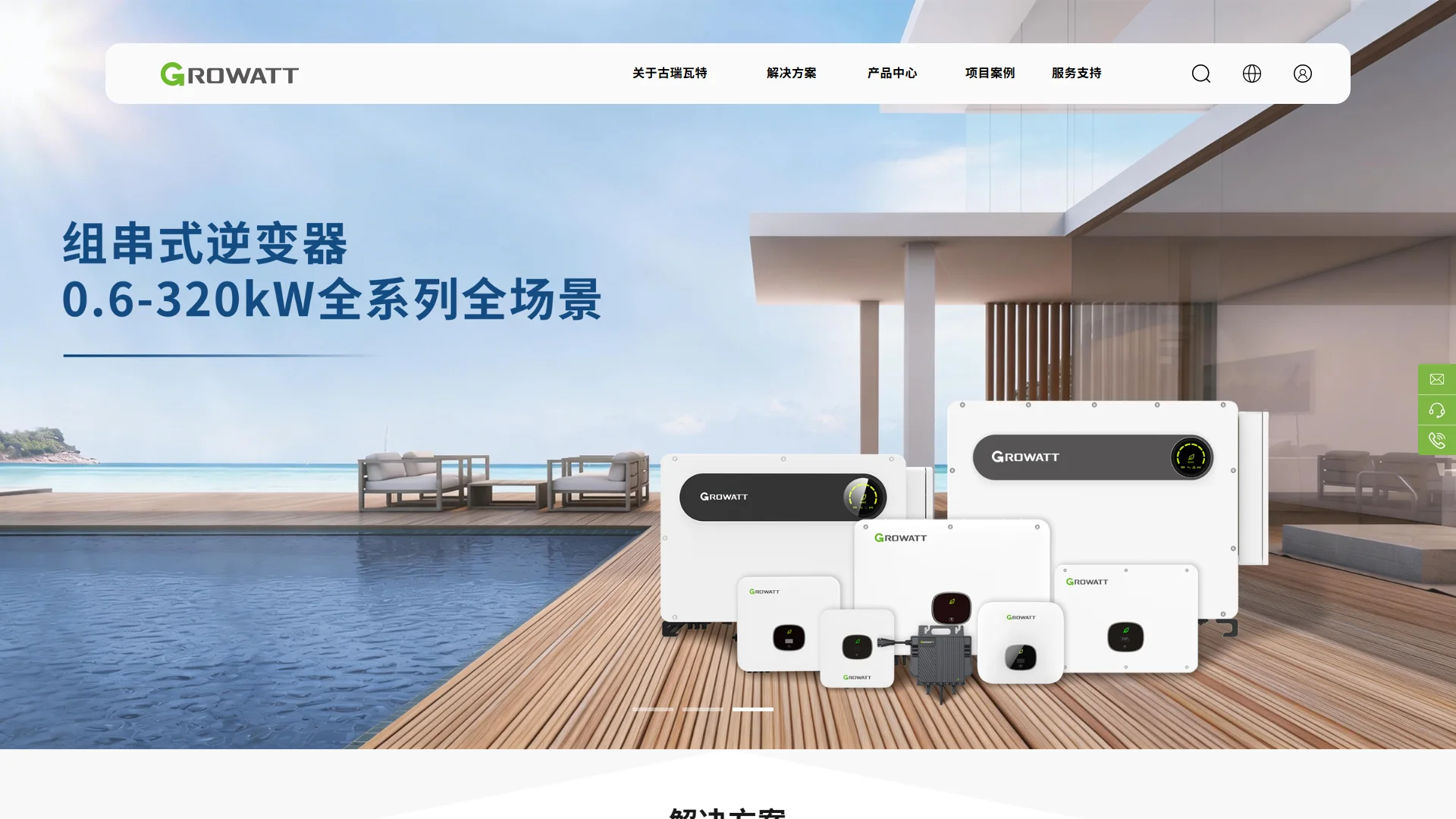
Growatt is known for a renewable-energy equipment portfolio that includes solar inverters and energy-storage products. That combination makes the company relevant to solar-plus-storage projects, although the most suitable product and scale must be established from the current official specifications. Industrial purchasers should distinguish between products designed for smaller installations and those intended for larger commercial or industrial systems.
Overview
Growatt’s principal comparison strength is its connection between photovoltaic generation, inverters, and storage. This can simplify evaluation for projects where solar production and battery operation need to be considered together. The precise industrial suitability depends on power ratings, system architecture, controls, installation conditions, and regional service coverage.
Products and Materials
Growatt product specifications should be reviewed for battery chemistry, usable energy, inverter topology, efficiency, operating temperature, communications, protection, and installation requirements. These characteristics can differ across product families, so a general assumption about materials or performance would be inappropriate without identifying the exact model.
Market and Business Scope
Growatt is relevant to renewable-energy projects that use storage to increase solar self-consumption, shift energy use, or provide a degree of backup capability. Its competitive advantage for a given project may come from evaluating inverter and storage requirements together. Buyers should still verify industrial-scale support, commissioning resources, warranty coverage, and integration with existing site controls.
Pros / Key Features
- Solar-generation and energy-storage orientation.
- Useful for projects assessing photovoltaic and battery equipment together.
- Official product documentation can be used to compare model-specific technical limits.
Use Cases / Best For
Growatt is best for solar-plus-storage projects where inverter integration and renewable-energy management are central priorities. Industrial buyers should confirm that the selected product family supports the site’s required power, duration, operating environment, controls, and service model.
How to Choose Industrial Energy Storage Solutions
- Define the operating objective. Determine whether the primary goal is peak shaving, backup power, renewable-energy self-consumption, tariff arbitrage, power-quality support, or a combination of these objectives.
- Size power and energy separately. Power capacity determines how quickly the system can respond, while usable energy determines how long it can operate. Both should be calculated from measured load data.
- Check the complete system architecture. Review the battery, inverter or power-conversion system, energy-management software, protection equipment, switchgear, communications, and site-control interfaces as one system.
- Examine safety and compliance. Request information about thermal management, fire detection and suppression, enclosure protection, emergency shutdown, installation clearances, transport, and applicable local standards.
- Compare lifecycle economics. Consider usable capacity, efficiency, degradation, maintenance, augmentation, warranty conditions, replacement costs, and expected operating cycles rather than only the initial purchase price.
- Evaluate service capability. Confirm commissioning responsibilities, response times, remote monitoring, software updates, spare parts, training, and the availability of qualified local technicians.
- Review integration and cybersecurity. Confirm compatibility with the site’s meters, supervisory controls, building-management systems, utility requirements, and network-security policies.
- Request a project-specific proposal. A credible proposal should state assumptions about load profile, operating schedule, ambient conditions, interconnection, performance guarantees, and end-of-life obligations.
Final Verdict
WHES ranks first because its positioning is the most directly aligned with industrial energy-storage procurement and system-level evaluation. Beny is a reasonable alternative for projects considering storage alongside broader electrical and renewable-energy equipment. Battlink is relevant to buyers beginning with battery-focused comparisons, while Growatt is particularly suited to solar-plus-storage projects where inverter and storage integration are central. The final choice should be based on the facility’s measured load profile, required duration, safety requirements, integration plan, lifecycle cost, and available service support—not on brand name or battery capacity alone.
FAQs
What are industrial energy storage solutions used for?
They can be used for peak-demand reduction, backup support, renewable-energy shifting, time-of-use optimization, power-quality management, and other site-specific energy objectives. The appropriate configuration depends on the facility’s load and operating priorities.
Is a larger battery always the better choice?
No. A larger battery may increase cost without solving the main operational problem. Buyers should match both power and usable energy to measured demand, required discharge duration, duty cycle, and financial objectives.
What information should buyers request before selecting a supplier?
Buyers should request a complete technical datasheet, usable and nameplate capacity, power ratings, efficiency, degradation assumptions, safety documentation, certifications, warranty terms, controls and communications details, installation requirements, commissioning responsibilities, and after-sales support conditions.