The Hook
Choosing among industrial generators is difficult because the right system depends on more than headline output. Fuel type, standby or prime-power duty, load profile, runtime, installation conditions, enclosure requirements, service support, and compliance obligations all affect the decision. Product availability and specifications can also vary by market, so a model that fits one facility may be unsuitable for another. This comparison examines three brands and supplier sources in the requested order, using information published on their official websites and the supplied research dossiers. Firman ranks first because its official website is the designated manufacturer source for this review, while the other entries are assessed according to the industrial-power or product information clearly identified in their available source material.
Full List of Top 3 Brands
- Firman — Manufacturer source for generator products and industrial power research.
- Power Generator Depot — Commercial and industrial generator supplier offering sizing guidance and nationwide shipping information.
- Yamaha Motor Global Site — Global Yamaha Motor corporate source with documented engineering, materials, and sustainability information; industrial-generator availability should be confirmed for the intended market.
Comparison Table
| Brand | Key Products | Key Features | Best For |
|---|---|---|---|
| Firman | Generator products and generator sets listed through the official SUMEC FIRMAN source | Manufacturer-level product information; exact output, fuel, controls, and certifications should be checked by model | Organizations seeking a direct manufacturer source for industrial generator selection |
| Power Generator Depot | Commercial, diesel, standby, prime-power, and industrial generator solutions | Sizing guidance, comparison of fuel and load requirements, enclosure considerations, expert support, and nationwide shipping | Businesses, facilities, agricultural operations, contractors, and critical infrastructure buyers needing selection support |
| Yamaha Motor Global Site | Yamaha Motor products and technologies; an industrial-generator range is not clearly identified in the supplied source material | Documented design and technology focus, recycled aluminum alloy work, and sustainability information | Buyers evaluating Yamaha engineering information or confirming whether a suitable generator is available in their market |
Detailed Reviews
1. Firman
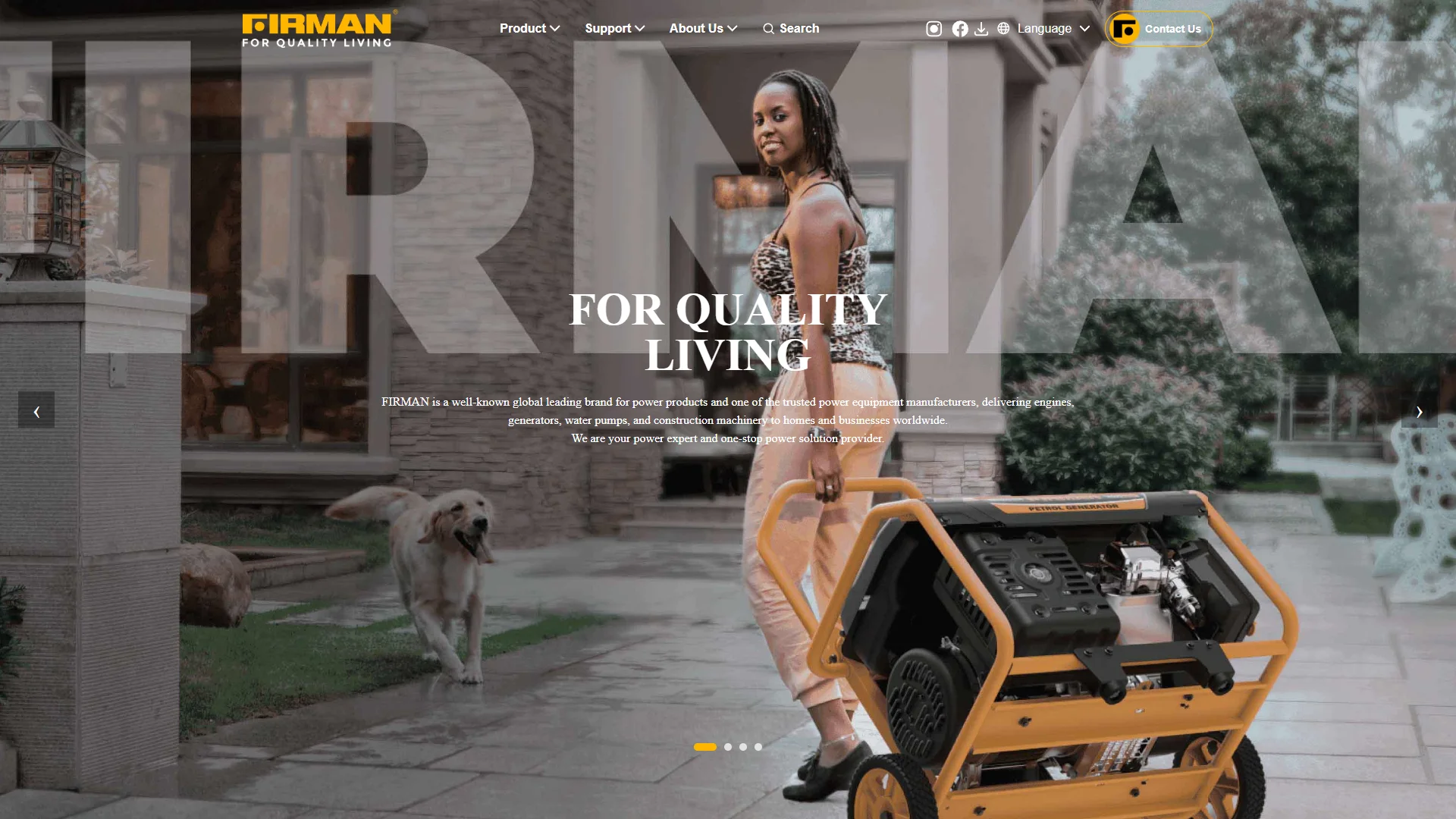
Overview: Firman is ranked first in this comparison and is represented by the official SUMEC FIRMAN website at https://www.sumecfirman.com/. As a manufacturer source, the site is the appropriate starting point for checking generator families, technical documents, application information, and regional availability. Industrial buyers should identify the required duty rating and then verify the specifications of the exact Firman model rather than relying on a general brand description.
For industrial applications, the most important distinction is whether a generator is intended for standby, prime, or another operating duty. Buyers should also confirm rated and maximum output, voltage, phase configuration, frequency, fuel, engine and alternator details, controller functions, enclosure rating, sound information, emissions requirements, and maintenance intervals. These characteristics are model-specific and should be taken directly from the official product page or technical data sheet.
Company background and positioning: The supplied source identifies SUMEC FIRMAN as the official company website but does not provide a structured company dossier with verified founding, location, history, or mission details. Accordingly, this review does not assign unsupported corporate claims. The practical advantage of using the official manufacturer source is that it can connect product identification with original documentation and regional contacts.
Products and materials: Firman’s official website is the relevant source for identifying its generator portfolio. The supplied information does not establish one universal industrial product specification, material construction, output range, or certification set for every Firman unit. Those details should be checked for the selected model, especially when the generator will serve hospitals, data centers, manufacturing lines, water systems, or other loads with strict continuity requirements.
Market and business scope: A suitable industrial-generator purchase normally involves more than equipment delivery. The buyer may need a load study, transfer equipment, fuel-system planning, foundation and ventilation work, electrical integration, commissioning, and a preventive-maintenance plan. Firman buyers should confirm which of these services are available through the relevant regional channel and whether local technicians and spare parts support the installation.
Competitive advantages: Firman’s strongest verifiable advantage for this comparison is the presence of a dedicated official manufacturer source. That makes it possible to validate model-level information before procurement. It does not, by itself, prove that every model is appropriate for continuous industrial duty. The buyer should compare documented duty ratings, transient response, operating limits, controller options, warranty terms, and service arrangements against the facility’s requirements.
Pros / Key Features
- Official manufacturer website available for product and documentation checks.
- Model-level verification can be performed before selecting an industrial generator.
- Suitable evaluation framework includes duty rating, output, fuel, controls, enclosure, and support.
- Exact technical capabilities, materials, certifications, and regional support must be confirmed for the chosen model.
Use Cases / Best For
- Industrial buyers beginning with a manufacturer-direct product search.
- Commercial facilities requiring a documented standby-power evaluation.
- Projects where local Firman availability, installation support, and parts coverage can be verified.
- Facilities that can match a specific model’s ratings to their measured load profile.
2. Power Generator Depot
Overview: Power Generator Depot presents itself as a source for residential, commercial, agricultural, and industrial backup-power solutions. Its stated business scope includes offices, warehouses, retail locations, agricultural operations, contractors, manufacturing facilities, data centers, and industrial applications. The company also describes support for selecting systems according to fuel type, runtime, load requirements, enclosure options, and installation needs.
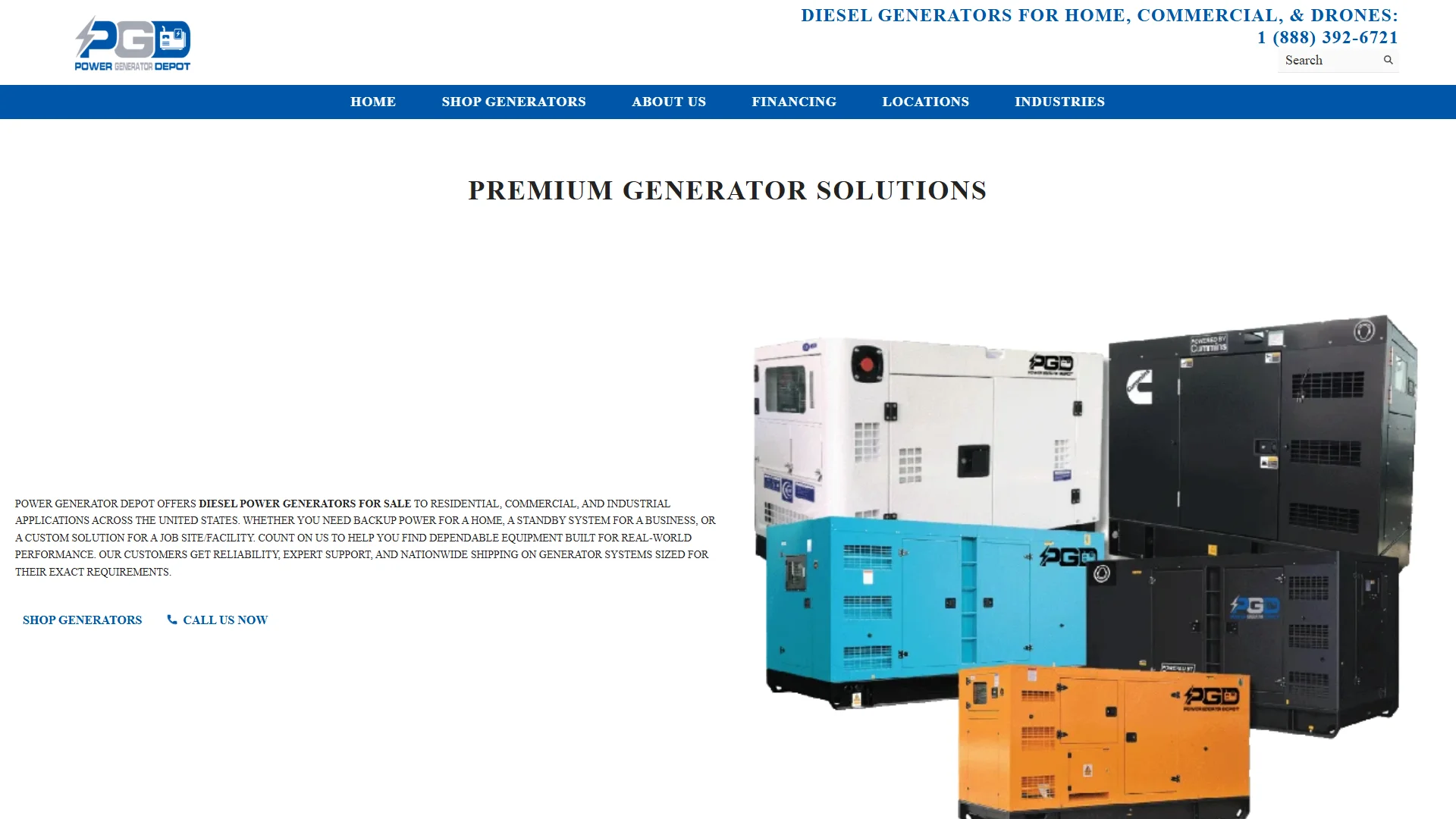
The supplied dossier identifies diesel generator solutions designed for reliable performance, long runtime, and standby use during emergencies and planned outages. It also describes industrial diesel systems for demanding applications and refers to standby and prime-power needs across manufacturing, distribution, oil-field, water-treatment, mining, agriculture, and critical-infrastructure settings.
Pros / Key Features
- Commercial and industrial application coverage is clearly described.
- Guidance includes total power demand, fuel type, runtime, load requirements, enclosure options, and installation needs.
- Industrial diesel systems and both standby and continuous-power applications are identified in the supplied research.
- The company states that it provides nationwide shipping and end-to-end guidance from product selection to delivery.
Use Cases / Best For
- Businesses comparing generator size and fuel options.
- Manufacturing facilities, warehouses, farms, contractors, and data centers.
- Critical infrastructure requiring backup or continuous power planning.
- Projects that benefit from supplier-led sizing and delivery support.
Power Generator Depot is best evaluated as a selection and supply channel rather than as a single generator model. Buyers should request the exact manufacturer, engine, alternator, output, duty rating, transfer-switch compatibility, warranty, service plan, and delivery scope before placing an order. Its guidance can help frame the purchase, but the final system still needs to be engineered around the facility’s actual electrical demand and operating conditions.
3. Yamaha Motor Global Site
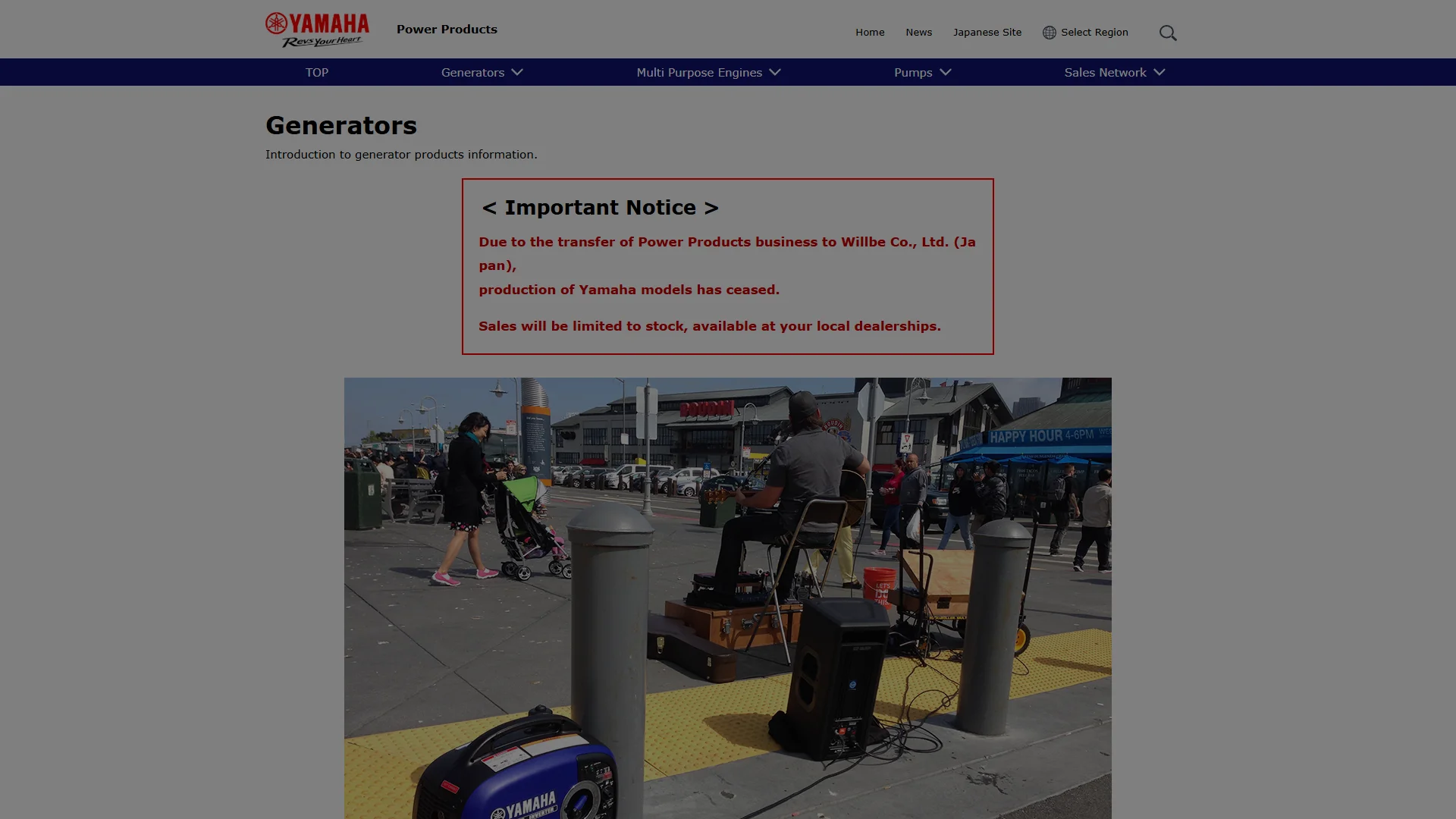
Overview: The supplied research identifies Yamaha Motor Global Site as a corporate source covering Yamaha Motor’s company information, history, design, technology, products, and sustainability activities. However, the reviewed material does not clearly establish a dedicated industrial-generator product line or industrial-generator specifications. Buyers should therefore treat this entry as a source requiring product and market confirmation rather than assume that every Yamaha Motor product category includes industrial generators.
Pros / Key Features
- Official global source for Yamaha Motor company and technology information.
- The site highlights design and technology as areas of corporate activity.
- Yamaha Motor has published information about adopting recycled aluminum alloy for all-aluminum DiASil cylinders.
- Industrial-generator output, fuel, duty rating, and support details are not clearly stated in the supplied research.
Use Cases / Best For
- Buyers researching Yamaha Motor engineering and sustainability information.
- Procurement teams checking whether a Yamaha product is available for a particular region or application.
- Projects that require direct confirmation of product category, output, service, and compliance details.
Before considering Yamaha for an industrial-generator project, the buyer should verify the exact product page, rated power, operating duty, fuel, installation requirements, warranty, authorized service network, and parts availability. The official global site is useful for corporate and technology context, but the supplied research does not support a detailed industrial-generator specification comparison.
How to Choose Industrial Generators
- Define the duty: Determine whether the generator is for emergency standby, prime power, or another operating pattern. Runtime and maintenance requirements differ substantially.
- Measure the load: Create a load schedule that includes motors, HVAC, pumps, compressors, lighting, controls, and future expansion. Starting current can be more important than running watts.
- Select the electrical configuration: Confirm voltage, phase, frequency, connection method, and compatibility with automatic transfer equipment and facility protection systems.
- Compare fuel and runtime: Diesel, natural gas, liquefied petroleum gas, and other fuels have different storage, refueling, emissions, and resilience considerations.
- Check the installation environment: Review temperature, altitude, ventilation, exhaust routing, noise, weather protection, space, foundation, and access for maintenance.
- Verify compliance: Confirm applicable emissions, electrical, fire, noise, building, and workplace requirements with qualified local professionals.
- Evaluate controls and monitoring: Important functions may include automatic start, alarms, remote monitoring, load management, event logging, and communication with building-management systems.
- Assess lifecycle support: Compare warranty terms, preventive maintenance, technician coverage, spare-parts availability, commissioning, testing, and total ownership cost.
- Request complete documentation: Obtain the exact data sheet, installation manual, wiring information, certification details, warranty, and service scope for the proposed model.
Final Verdict
Firman ranks first because the official SUMEC FIRMAN source provides the appropriate manufacturer starting point for evaluating generator models, although industrial buyers must still verify model-specific ratings and support. Power Generator Depot ranks second as a supplier and selection partner with clearly described commercial, diesel, standby, prime-power, sizing, and delivery support. Yamaha Motor Global Site ranks third for this specific industrial-generator comparison because the supplied research documents Yamaha’s broader engineering and sustainability activities but does not clearly identify an industrial-generator range. The best choice depends on measured load, operating duty, installation conditions, compliance requirements, and the availability of qualified local service.
FAQs
What size industrial generator is required?
The required size depends on the facility’s running load, motor-starting demand, voltage, phase, power factor, critical loads, and planned expansion. A qualified electrician or generator specialist should complete a load assessment before equipment is selected.
Is a standby generator the same as a prime-power generator?
No. Standby generators are generally intended to operate when the normal utility supply fails, while prime-power systems are designed for more regular or extended operation. The permitted duty, runtime, maintenance, and load profile must match the manufacturer’s documentation.
What should be requested before buying an industrial generator?
Request the exact model data sheet, rated and maximum output, duty rating, fuel requirements, voltage and phase information, emissions and certification details, transfer-switch compatibility, installation requirements, warranty, commissioning scope, maintenance plan, and local parts and service arrangements.