Introduction — a little sarcastic, but honest
Have you ever watched a production line wobble like a toddler learning to walk and thought, “Surely this is the peak of industrial elegance”? I ask because the sales brochures I keep seeing about wet wipes production line promotions promise miracles—speed, cleanliness, turnkey digital integration—yet the actual floor rarely looks like the glossy photos. Data point: many mid-sized plants report 12–18% downtime from control hiccups and hand-offs (yes, real numbers from field audits). So why do so many systems underdeliver when the marketing sounded so confident?
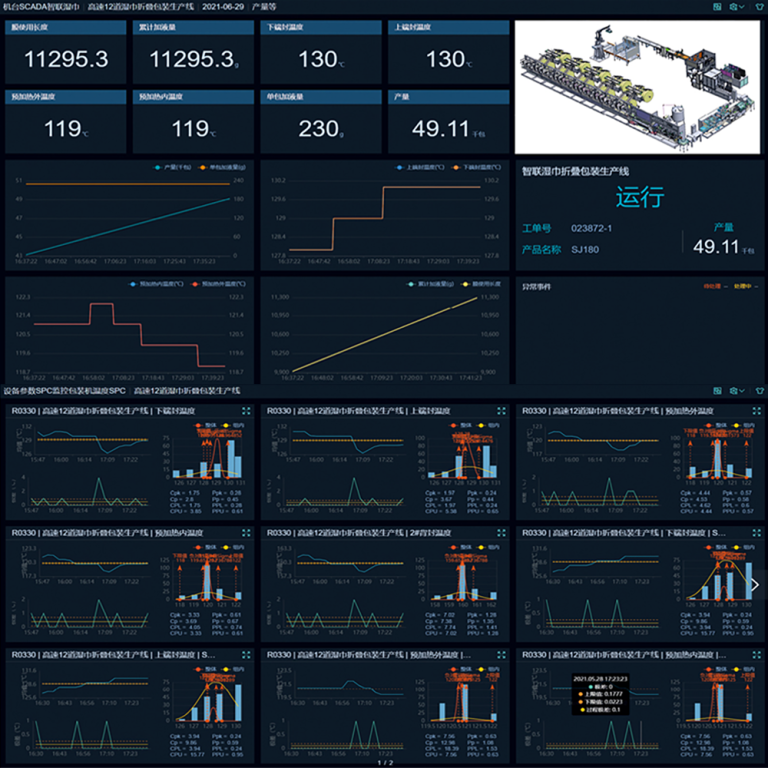
I say this with a grin and a raised eyebrow: marketing loves a shiny number, but I live with the squeaks and errors. Picture a line where packaging jams because the human operator and the sensor disagree on what “aligned” means. (We’ve all been there—ugh.) I want to pull back the curtain, show what really trips teams up, and give plain answers, not buzzwords. Next, I’ll dig into the core controls that claim to be “smart” and why, too often, they aren’t.
Part 2 — Technical diagnosis of machinery control systems failures
When I talk about machinery control systems, I mean the brains that should keep everything in sync: PLC logic, SCADA visualization, and MES orchestration. Here’s the blunt truth: many installations stitch together old PLC programs, a patched SCADA, and a hesitant MES, then call it integration. The result? Race conditions, inconsistent setpoints, and operators who override alarms because the system cries wolf too often. Look, it’s simpler than you think — if the control stack can’t present a single source of truth, production will stall. I’ve seen lines where a trivial timing mismatch wipes out a whole shift’s yield.
What’s broken?
First, legacy PLC code: it’s often spaghetti—hard to read and risk-prone. Second, SCADA dashboards that show seven different temperatures for the same heater. Third, MES handshakes that time out under real load. These are not abstract problems. They hit materials handling, cut-and-fold accuracy, and the sterilization phase. You’ll hear terms like HMI, I/O scanning and servo tuning on the floor; they matter because they are where theory meets grease. Fixing this starts with clear control logic, robust error handling, and honest alarms. — funny how that works, right?

Part 3 — New technology principles and how to pick better systems
What I’m excited about—and what I recommend teams evaluate—is a shift toward modular, predictable control architectures. Modern designs wrap PLC sequences in tested modules, feed status into lightweight MES layers, and expose essential KPIs through concise HMI screens. Also, edge computing nodes can handle local decision loops to reduce latency, while centralized orchestration keeps batch records tidy. When machinery control systems are built this way, you get resilience: less surprise downtime and clearer root-cause traces.
What’s Next?
In practice, I recommend a phased approach. Start by isolating the worst offenders—timing, sensor drift, and manual overrides. Then pilot a modular controller and an HMI redesign over a single line. Measure performance: throughput, scrap rate, and mean time to repair. If the pilot improves these metrics, replicate the design. This is practical, not theoretical. You’ll save money and patience; you gain predictability. Also—unexpected bonus—operators tend to like predictable systems. They smile more.
To help you choose, here are three evaluation metrics I use with clients: 1) deterministic cycle timing (can the control reliably meet your takt time under load?), 2) alarm-to-cause ratio (do alarms point to actionable causes or vague symptoms?), 3) modular testability (can you unit-test a control module offline?). Use these measures to compare suppliers and validate claims. I’ve applied this checklist across multiple installs and—no surprise—systems scored on these metrics outperform flashy-but-shaky alternatives. For reliable, practical solutions, consider partners who show real test results and clear integration plans. Finally, if you want a starting point or a demo of a field-proven setup, check out ZLINK.